The names are fictional, as there are dialogues, the case is real.
From 17 days to 1:
SGS Streamlines Import Verification for GM in Africa
That was not his best morning. Tomas Fischer, the Head of the GM Africa Logistics, received terrible news from the Nairobi office.
“Tomas, in three months, we will have to certify all our shipments to Kenya for compliance with Kenyan standards. That would require booking a physical inspection by an appointed company and testing every batch at an accredited lab. Fees are paid upfront. Failure to observe the procedure entails huge delays and a penalty of 25% of the goods' CIF value.
My initial assessment suggests our business here is no longer sustainable.”
Indeed, it wasn’t. Some 100,000 kinds of automotive components produced by an untold number of manufacturers are shipped from at least a dozen countries, often by air, to order, in small quantities, urgently, several times a day.
There were two options. One was to book a trip to Kenya to meet the regulator and try to cut a deal, given GM’s significant role in the Kenyan economy.
Another was to talk to the Service Provider and hear what they say.
A meeting with SGS was arranged before booking tickets to Nairobi.
Fast forward three months,
“The stellar service offered by SGS allowed us to focus on our business and forget the nightmare of the cargo clearance process. Our company is in the right hands. Besides, we can safely replicate the procedure in other African countries.”
Thomas Fischer, GM Africa Logistics Head.
What has happened?
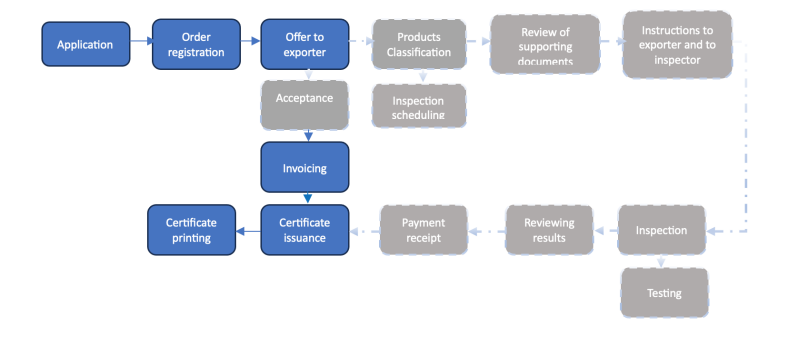
SGS invoked a fast-tracking procedure called Registration, which applies to compliant suppliers with substantial export volumes. The route allowed for minimal inspections and dramatically reduced testing, thus cost and, more importantly, turnaround time.
However, there were several challenges.
- How do you convert 100k+ parts into a manageable number?
- What to do with testing if no Kenyan standards are available?
- How do you handle two dozen offices of the same client?
- SGS experts scientifically compressed a universe of components into 47 groups based on the parts’ essential features.
- The next step was to obtain all GMs' and suppliers' QMS certificates. That was easy because such certificates are a sine qua non for automotive manufacturing. Systems envisage regular second— or third-party testing.
- A high level of GM compliance allowed SGS to retrieve another fast-tracking tool, selectivity in inspections. That removed one of the main contributors to TAT and dramatically reduced transactional costs.
- SGS appointed a Key Account Manager in Germany to handle all GM business. Suppliers would apply to SGS Hamburg, which expedites their orders through the network. Invoices are issued monthly with 30-day credit terms.
Working with SGS had a few bonuses.
- The importer and the clearing agent can track the order with a handy online tool, giving them an opportunity to plan clearance and delivery.
- In case of problems, they can talk to a dedicated officer in the SGS Contract Management Office in Nairobi, who would troubleshoot with the network.
What has allowed SGS to solve this problem so elegantly? Key success factors were
- global presence (160+ countries),
- sophisticated proprietary software Tradeworks (R) that allow full transparency and access to every document,
- centralized decision-making.
- Regardless of Country of Origin, all certification decisions were made in one Certification Center,
- Nairobi-based Contract Management Office leads the entire network, connecting all relevant parties.
What’s next?
While other African countries gradually followed suit, SGS has signed respective contracts with all significant regulators. GM is expanding its cooperation with SGS. Don’t fix it if it ain’t broken!
While GM is a key client for SGS, 90% of all registered shipments receive certificates within 1 day. If you need peace of mind while shipping your goods to Africa, try SGS, an efficient and reliable partner for your business.
Fig.1. Business process