

Part 3. Liquidity Killers
Why some apartments are harder to sell or rent - quietly
Many apartments feel fine at purchase.
Problems surface later, when daily friction accumulates or when exit becomes necessary.
Over time, I’ve seen the same factors reduce resale and rental demand, even in “good” locations.


Framing
Liquidity problems rarely announce themselves early.
They appear later — when you need to rent, refinance, or exit.
What feels tolerable to you may be unacceptable to the next buyer.
Layouts don’t fail loudly
Non-standard layouts rarely make an apartment unsellable.
They simply reduce the number of people who can imagine living there.
Liquidity shrinks silently.


Irreversible decisions
Some design choices cannot be undone cheaply:
- structural walls
- window placement
- plumbing logic
Mistakes here don’t age: they compound instead.
Taste doesn’t scale
Personal taste feels like value.
To the market, it’s friction.
The stronger the taste, the narrower the audience.


Noise you cannot fix
Some problems survive renovation:
• traffic patterns
• nightlife behaviour
• building acoustics
They don’t disappear — they get priced in.
Renovation illusion
A new finish can delay rejection.
It cannot eliminate it.
Buyers sense limits faster than sellers expect
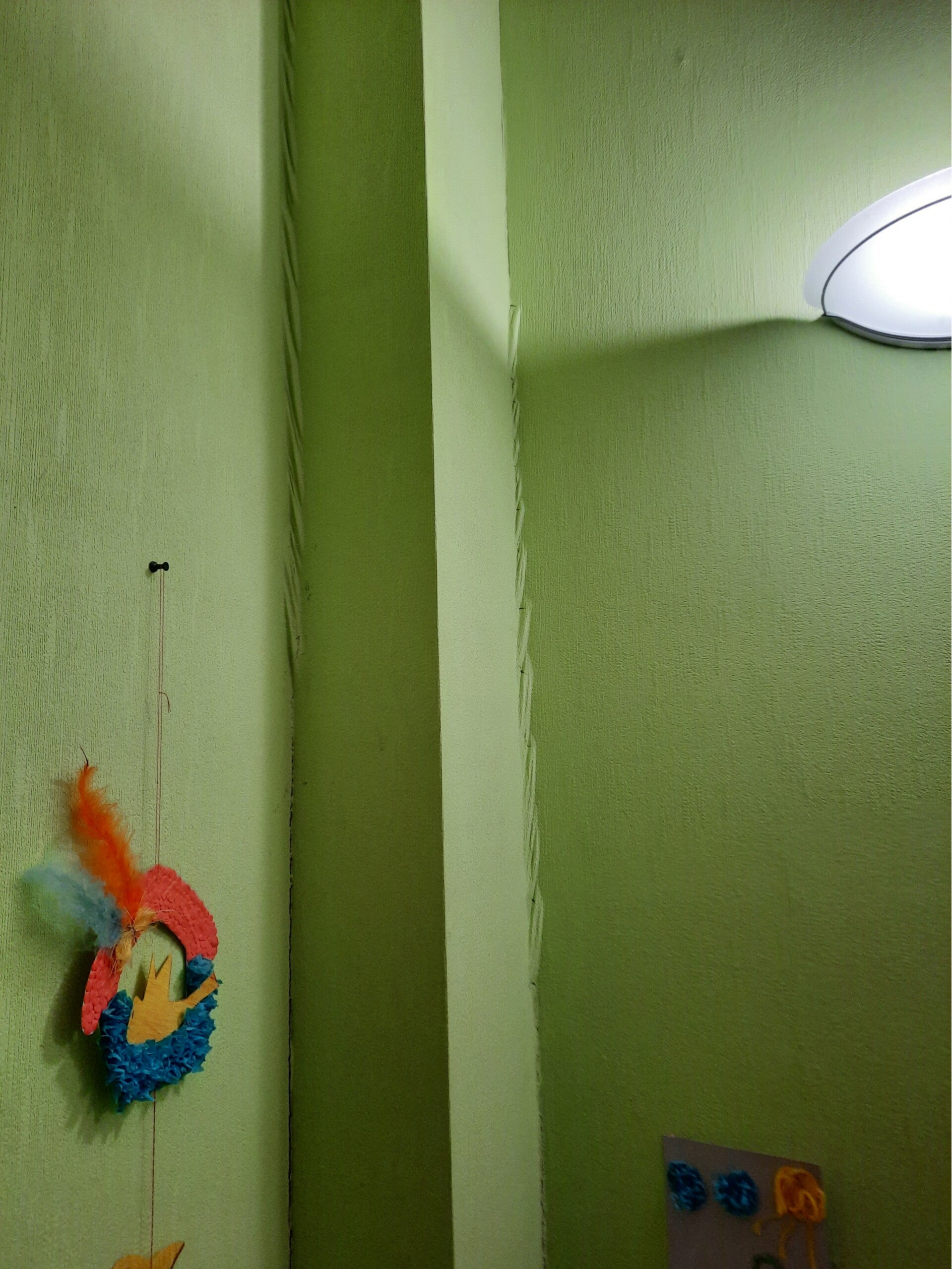
The settlement of the load-bearing column formed cracks between it and the walls. The owner put wallpaper over it. However, continuous settlement produced tell-tale folds in the wallpaper.

Liquidity vs comfort
Comfort is personal.
Liquidity is collective.
Confusing the two is one of the most common exit mistakes.
Fitting as risk management
Good fitting isn’t decoration.
It reduces regret, friction, and resale resistance.
It is a liquidity tool.


The copywriting parallel
A good apartment sells itself only if it is legible.
Space has grammar too.
Checklist
Liquidity assessment spans dozens of small decisions.
This section alone covers multiple points of my 57-point checklist.


Closing
Liquidity is invisible when everything goes well.
You notice it only when you need to exit.
The checklist exists to make that visible earlier.
If this matters to you, you know how to reach me.